
Love Love Love
love how, love who, love why

My lovely readers,
Good evening from Kathmandu. Today the evening is cold and sweet, like plums that were in the icebox. I’m thinking of love.
If there were such a thing as a core self, I’d call mine a lover. Despite the relentless hating I do on the daily, thinking on love, speaking on love, doing love keeps me going, gets me out of bed in the morning, gets me into bed… Everyday I have lived on this whirling planet I have striven towards love; strove to love and be loved. And I have done so gracelessly, messily, thirstily, imperfectly, hideously even, ecstatically, breathlessly, single-mindedly, absently…and so on.
So have you! So have you.
Today’s letter on love to you, I want to look at this mess of a life in love with you.
What do we mean when we say odd shit like, “Everyday we strive towards love”?

We could mean it in the sense of uncovering, or crafting, compassion for life and non-life in this lifetime. We could mean it in the sense of doing: where love is the currency spent and earned by enacting our will upon the world through the act of translating our essence into creation (oof can someone kick early Marx out of this group chat). We could mean it in the sense of cultivating responsibility towards each other, usually our families. We could mean it in the sense of loving our friends and partners better — seeing them for who they are, allowing them to them see us, and borrowing from bell hooks, nurturing each other’s spiritual growth. We could even mean allowing ourselves to see and offer compassion to our own being.
I think, though, we would be getting ahead of ourselves with a lot of these meanings. If you pulled up and spouted “I’m striving towards love,” in general conversation, I think most of us would urge you to download a dating app and get this hopeless-sounding issue out of your system!
“Aww, don’t worry you’ll find someone and fall madly in love, have lots of babies!”
So be it. There is much to look at even within this application of loving (no pun no pun).
How do we Love?
How love exists in a life is personal, of course, but only so to a degree. Love is subject to cultures, and the way time, material realities, flowing influences, even the law move through our cultures changes our love beliefs. Let’s do a quick skim across what is apparent: we love within partnerships and within families: commonly patriarchal families tied by blood, less commonly more diverse, found families.
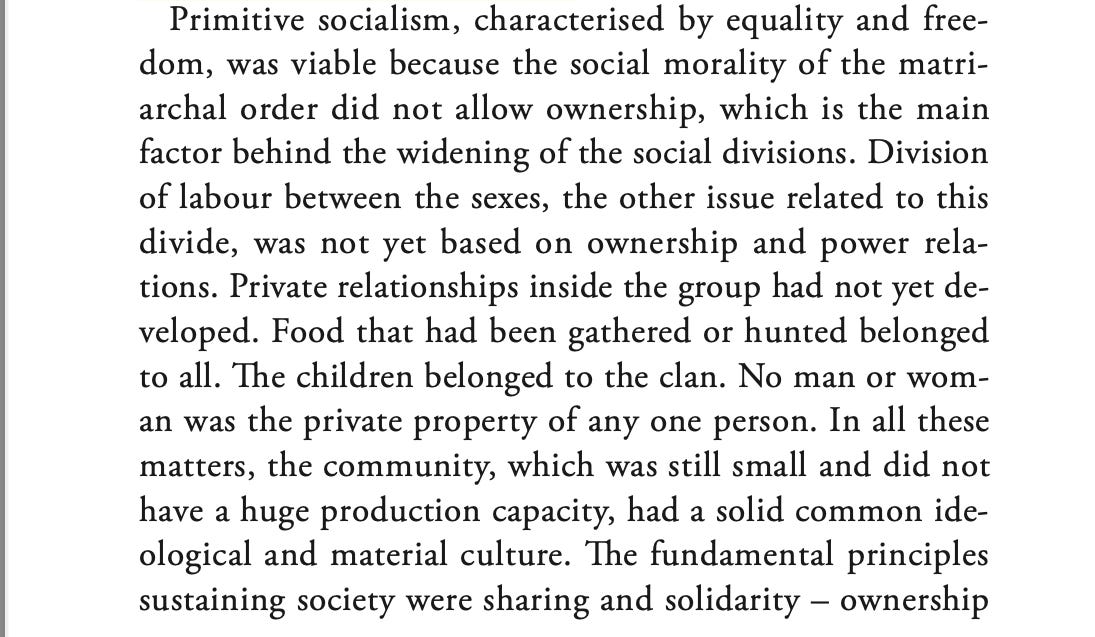
A particular love sustains the structure of a blood family. This kind of love is defined by familial roles. Father owns and Father earns, Mother makes the house, bears and rears Father’s children. Fatherly and Motherly love serve different functions in the lives of the child. Demands on the Father’s love generally don’t stretch beyond providing for and protecting Wife & Child from external physical harm (side eye galore). Demands on Motherly love encompass the daily toil of child rearing; entailing complete attention and attunement to the child, within which the burden of tending to the needs, the whims, the behaviors and development of the child falls first on Mother, before, and if ever, falling on Father.
Across cultures, Mothers take on the particular weight of familial love, and all failures of familial love, even the failures of Fathers, fall on Mothers. I think this is in part because of the deification of Motherly love. While Fatherly love is tied to material security and protection — part of which he grants by establishing the family structure under his ownership, “legitimizing” his wife and child’s position in society by lending them his name, and passing on his nationality to his children, and most of which can be subject to circumstance and context, Motherly love is supposed to be naturally occurring, instinctive, unflagging, resourceful, an ever-renewing reserve, the highest order of love. Motherly love is supposed to occur freely and flow naturally, while Father’s love must be achieved, his attention earned, and his brutality avoided. Any failure of Motherly love is a blight on the Mother’s very character, while a failure of Fatherly love, ranging from detached coldness to horrendous abuse, can be the fault of his workplace, his childhood, his temperament, his parents’ fault, his wife’s fault, his children’s fault.
And while this might play out in a billion different ways in our familial relationships, the expectations we put on our moms are often starkly more extractive than the expectations we put on our dads. Even for those of us who profess closer relationships with our dad, our dad is just some guy. Our mom, though…we hold her to higher standards, we expect her to give us everything she has, and we expect her to give us this perfectly.

We’ll put a pin in our moms for a second. Lets shuffle along back to our family structure. We have Grandparents, to whom we owe care in old age, and whose ‘wisdom’ we owe respect (putting wisdom in quotes here because we call a huge number of things wisdom). Children belong to the family unit, their love exists in the forms of obedience, respect, gratitude, and the eventual goal of taking on the care of their parents. Good children, like good mothers, love their families the best.
Good children, good mothers, and good fathers (loosely), contribute love and care to the family unit by upholding norms, especially gendered ones, that keep the family unit not only intact, but also replicable. The norms this nucleus follows is thoroughly policed under the judgmental and omnipresent supervision of the parents, uncles, aunts, brothers, sisters, in-laws, and neighbors of Mother and Father. Of course this extended unit can work to provide care so that Mother isn’t overly burdened by the care-work put on her, their roles in family swing in ways that are drastic and interesting. While they are also afforded the position of being the closest people to the family unit, (afanta, naatedaar), they are also othered by taking on the distant position of society, of samaaj, who have the powers to ostracize your family unit with their “ke bhanla” powers, powers that loom large in the imagination of our parents, our grandparents.
The strictest supervision, and the harshest policing, occurs in the arena of romance. Even heterosexual romance develops mostly in secrecy, away from the keenly judgmental surveillance of the family. Lesbian relationships tend to escape the same scrutiny, because a level of intimacy between girlfriends is not that unusual, and because lesbian relationships are still not seen as valid romantic and sexual relationships (very interesting to think about why). Which is not to say that psychological and physical violence and deep homophobia is not leveled at lesbians, especially lesbians and bi girls who don’t pass. Gay relationships and expression are difficult to conceal — they are most acutely exposed to abuse.
So why is romance, even heterosexual ones, so strictly surveilled and policed by our samaj circle? While purity culture is laid on so thick over our relationships (I couldn’t count the number of times I’ve been called a whore even if I were good at math) and it’s difficult to get rid of its sticky residue coating our every interaction and self-expression, our family unit is also keeping tabs on our love lives so that we, their progeny, don’t get swept into a “love” marriage outside of caste.
I don’t think I’d be amiss in saying most people pursue romantic love with the aspiration, sometimes more immediate and burning and sometimes more distant, of marriage. Attraction and affection then become categorized into whether something is just a situationship (I was very unlucky to have watched Rocky aur Raani recently so “just a thing, just a fling” is ringing in my head), or whether something is serious — whether or not you’d want to create serious partnership with this person, perhaps for the rest of your life, and seal it with marital union. Make it “official”. Receive state benefits. Start your own family unit. Create your own mini state.
Who you’re attracted to, who you find interesting, with whom your romance blossoms then become matters of deep interest to your family unit, which is deeply vested in your marriage within caste, ethnicity, class. Indoctrination into endogamous campaigns are pervasive and ongoing at every stage of life. People are inculcated into endogamous values early on, learning to fear the isolation, excommunication, mistreatment, and psychological and emotional burdens of marrying outside the caste or ethnic group.
I have to say, though my family has seen its share of inter-caste marriages and marriages across ethnicities, my family’s mistreatment of non-endogamous couples has left deep scars in the lives of the couples, and in our lives too. Endogamy is a belief system that is sustained by total ownership of children, driven by the will to uphold caste purity and further caste domination. It is a belief system that is emotionally and psychologically corrupt. It is a system designed to ideologically and physically entrap women in households that exploit them, and within which they eventually perpetuate exploitation.
From women losing their lives to ‘honor killings’, from communal isolation that makes the lives of couples, particularly women, very challenging, to horrendous murders of marginalized people by oppressor groups in response to inter-caste romance — we can see that endogamy is a practice upheld in our region not only with ideological inculcation, not only with the threat of social isolation, but also with force, with extreme violence.
As I write this, we mark more than three and a half years since the murders of Nabaraj B.K., Tikaram Sunar, Ganesh Budha, Lokendra Sunar, Govinda Shahi and Sandip BK. In May 2020, the six young men were killed in a premeditated lynching by an ‘upper-caste’ mob in Soti Village, West Rukum, in retaliation to Nabaraj’s arrival with his friends, at the request of his ‘upper-caste’ girlfriend to come to the village and marry her. To this day, the family of the victims have not received justice. Close to four years after the crime, the district court in West Rukum was supposed to deliver its verdict today.
Nabaraj B.K and his friends were from the Dalit community in Jajarkot. His girlfriend was from the Thakuri community in Soti. At the time of their relationship, the girl was merely 17, still a child, and with Nepal’s marital law disallowing marriages between couples if they aren’t at least 20 years old, the marriage was unlikely to take place anyway.
The application of these laws are indeed murky — with consent of the parents, child marriages are rampant in Nepal, in Rukum. It seems to me that it isn’t so much the case that the law necessarily shields young girls from becoming child brides, but more so that this law can be one instrument in preventing inter-caste marriages between youths.
However, this community in Soti didn’t simply seek to apply this law against Nabaraj B.K and prevent the wedding. No, that was not enough to quench their caste supremacist bloodlust. Instead, this community lured him and his friends to the village and murdered them. This was more than protecting their underaged daughter — this was a grisly, gratuitous, caste-based hate-crime.
Read more from Dr. Mitra Pariyar here.
We hear stories of immense violence — caste-based lynchings, child brides, marital rapes, domestic violence, lifelong abuse. We hear them everyday if we open our ears to them. They come from with our own family units — the family units that so closely police the relationships we have outside of them. We hear stories everyday, about marriage and family, that should blister our conscience. We hear stories that should force us to look at our marriage norms, to look at the institution of marriage, in the face. To look at it coldly, with a critical eye.
I think because our culture makes the distinction between a ‘love marriage’ and an arranged one, it is already super clear to us what the function of marriage is. We don’t have to think so hard about it. Marriage is a legitimization of partnered-life, within which those who have partnered are expected to fulfill certain family-making and labor requirements of the state. One illustration from this article titled: Japan unveils proposal to promote marriage, raise birthrate:
Japan’s population of more than 125 million has been declining for 15 years and is projected to fall to 86.7 million by 2060. A shrinking and aging population has huge implications for the economy and for national security as the country fortifies its military to counter China’s increasingly assertive territorial ambitions.
Many younger Japanese have balked at marrying or having families, discouraged by bleak job prospects, corporate cultures incompatible with having both parents — but especially women — work, and the lack of public tolerance for small children.
To address the problems, Ogura’s plan proposes increased financial assistance, including more government subsidies for child-rearing, more generous student loans for higher education and greater access to child care services. It also aims to change the cultural mindset toward more gender equality both at work and at home. The proposal also includes increased government assistance to companies to encourage more of male staff to take paternity leave, which has been a point of contention for working fathers fearing retaliation.
Marriage is incentivized by the state with legal and financial benefits. It is incentivized by society by offering couples respectability. It is a civil right that is granted to some couples by default, and withheld from others. What kinds of couples are barred from these rights, and why, can tell us a lot about what the function of marriage for our state is. Who is most incentivized to marry, and who is most incentivized to marry very young, can also tell us a lot about the societies we live in.
We’re unpinning our moms here to ask her how come she got married when she did? To the person she got married to, considering what she went through afterwards? Why didn’t she leave? How many of us can sit with her stories without grieving the lives our moms could have lived? Lives she would have lived in a world where she wasn’t passed from ownership of parent to ownership of husband, where her labor wasn’t exploited, where her surplus was rewarded, where she was nurtured, instead of abused.
The girls who get it get it: Passing from the ownership of her family to the ownership of her husband didn’t free your mom. It won’t free you.
Okay, Love.
It’s bleak, but love exists regardless, outside of religion, outside of legal union, outside of family unit and statehood. Love as Devotion. Love as Compassion. Love as Growth. Love as Miracles. Love as Live Giving. These Loves exist in all of our lives.
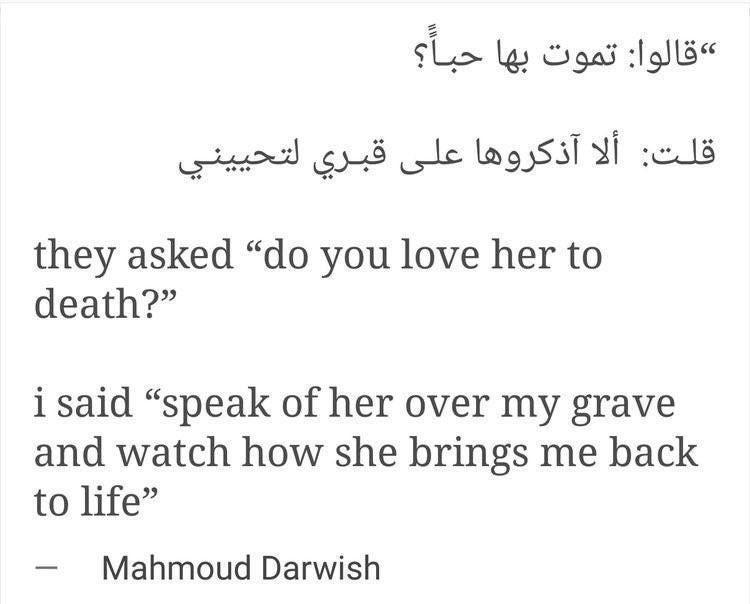
But how do we pay attention to these Loves? How do we grow them? And what of the love that takes? What of the love that burns in our chests, hurts us to our marrow? Love that mistreats us, and love that discards us?
What of love that makes us feel like the subject of our affection is digging into our soggy hearts with a spoon? What of love that can’t be cleaned up of jealousy?
What of love that can’t be separated from it’s evil twin: ownership?
But it is too late for that tonight. For now, I will leave you here with this incredible video essay by my favorite, Khadijah Mbowe, who I mentally synchronized with at absolutely the right time!
Wishing you a week full of love, and I will arrive in the mail next week with Love Love Love Pt. II.
Love,
Xifali
Love how : love how your heart desires
Love who : love who your heart desires
Love why : because your heart desires 😅